



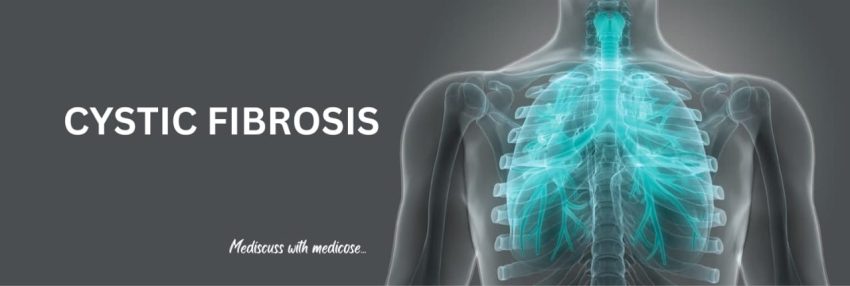
Cystic fibrosis is a GENETIC DISEASE, that damages your lungs, digestive tract and other organs. It causes sticky, thick mucus to build up in organs, mainly in the lungs and the pancreas. It’s an inherited disease caused by a defective gene that can be passed from generation to generation. In people who have CF, thick mucus obturate the airways and makes it difficult to breathe.
Mucus also blocks the ducts of pancreas, causing problems with digesting food. Babies and children who have CF might not be able to absorb required nutrients from food they eat. CF, which is chronic (long-lasting) and progressive (getting worse over time), also affects your liver, sinus, intestines and sex organs.
How much cystic fibrosis (CF) is common ?
Among white children in the U.S., the rate of CF cases is 1 in 2,500 to 3,500 newborns. CF affects about 1 in 17,000 Black newborns and 1 in 31,000 newborns of Asian descent.
Causes cystic fibrosis (CF).
- Cystic fibrosis is genetic disorder.
- People with CF inherit two faulty genes, one from each parent.
- CF is said to be recessive because you need to have two gene variants to have the condition itself. (An older name for gene variant is gene mutation.) that means Your parents don’t need to have cystic fibrosis to affect you as a CF. In fact, many families don’t have a family history of CF.
- If your family doesn’t have a history of cystic fibrosis, the person with the gene variant is called the carrier. About 1 in 31 people in the U.S. is a carrier who is free of CF symptoms.
Symptoms of cystic fibrosis (CF).
CLASSIC CYSTIC FIBROSIS
Children who have classic CF have the symptoms as follow :-
- Thrive failure ( weight or rate of weight gain is significantly below that of other children of similar age and sex).
- Loose or oily stools.
- Trouble in breathing.
- Recurrent wheezing.
- Frequent lung infections (recurrent pneumonia or bronchitis).
- Recurrent sinus infections.
- A nagging cough.
- Slow growth.
ATYPICAL CYSTIC FIBROSIS
People with atypical cystic fibrosis may be adults by the time they are diagnosed with atypical CF. Respiratory signs and symptoms may include:
- Chronic sinusitis.
- Breathing problems, possibly diagnosed as asthma or COPD (chronic obstructive pulmonary disease)
- Frequent bouts of pneumonia.
Other signs and symptoms of atypical CF may include :–
- Dehydration or heat stroke that reveals abnormal electrolyte levels.
- Fertility problems.
- Pancreatitis.
- Unintended weight loss.
- Diarrhea.
Diagnostic tests for cystic fibrosis.
Mostly CF patients are diagnosed in childhood. doctors do it by evaluation of family history and by several different tests and methods. they includes as follow:-
- Newborn screening.
- Sweat test.
- Genetic tests
- Chest X-rays.
- Sinus X-rays.
- Lung function tests.
- Sputum culture.
- Nasal potential difference (NPD).
- Intestinal current measurement (ICM).
People with atypical cystic fibrosis may have normal sweat test in terms of the levels of chloride. Some people with atypical CF may have been born before testing became routine. Your provider may order NPD and ICM tests when the diagnosis is questionable.
Treatment for cystic fibrosis.
You’ll probably have a healthcare team that includes a specialist in cystic fibrosis and many other types of carers. There is no permanent cure for cystic fibrosis, but your team will help you manage the disease. The main focus of management is keeping your airways clear. Your provider will also prescribe medicine when needed.
Keeping airways clear
You can help to keep your airways clear if you have cystic fibrosis in following ways:
- You can learn special ways of coughing and breathing.
- You can use devices that fit into your mouth or therapy vests that rely on vibrations to loosen mucus.
- You can learn something called chest physical therapy, also known as postural drainage and percussion to loosen the mucus. By this method, you move into certain positions so that your lungs can drain easily. Another person claps their hand on your chest and/or your back to help loosen the mucus by coughing. You might combine this with coughing.
Medications for cystic fibrosis
Your provider may prescribe these medicines, which won’t cure CF, but which will help you in certain situations.
- Antibiotics to treat lung infections or prevent them.
- Inhaled bronchodilators to make breath easier by opening and relaxing your airways.
- Inhaled medicine to make mucus thinner and easier to get rid of.
- Anti-inflammatory drugs, including steroidal and non-steroidal anti-inflammatories.
- Medicines that helps to treat the cause of cystic fibrosis in people with certain gene variants.
- Pancreatic enzymes to aid in digestion.
- Stool softeners to help with constipation.
Surgeries for cystic fibrosis
You may need to go for surgery for cystic fibrosis or one of its complications. These might include:-
- Surgery on your nose or sinuses.
- Bowel surgery to remove blockages.
- Transplant surgery, including a double lung transplant or a liver transplant.
Why do a cystic fibrosis patients need high calorie and high fat diet Why is a high-calorie, high-fat diet needed for people with cystic fibrosis (CF)?
People with cystic fibrosis have nutritional needs that aren’t the same as the needs of people without CF. People with CF may need 1.5 to 2 times the number of calories as people without CF. You need the extra calories if you have CF because you use more energy than other people to breathe, fight lung infections and maintain your strength.
You also need more calories and fat because cystic fibrosis stops the digestive enzymes made by your pancreas from working completely. This means nutrients and fats from foods aren’t fully absorbed by your intestines.
Although the enzyme capsules that are taken before all meals and snacks helps digest fats, proteins and starches, a certain amount of nutrients and fats don’t get absorbed. If your body doesn’t absorb enough fats, then fat-soluble vitamins aren’t being fully absorbed either, and these vitamins are needed to protect the lungs.
It’s also important to stress that people with cystic fibrosis should keep a higher than normal weight starting in early childhood. Researchers have shown that young people with CF who maintain a higher weight grow faster and taller up to puberty and again grow taller when they hit their growth spurt at puberty.
Young people with CF who started life at a lower weight did not grow as many inches, started puberty at a later age and never got that same puberty growth spurt. Reaching your full genetic potential — getting as tall as possible with lungs as large as possible — is another reason why higher-than-normal weight in young people with CF is so important.
Another common misbelief is that salt (sodium) is unhealthy for all people. This isn’t true for children and adults with CF. People with CF lose a lot of salt in their sweat. Although there’s not a set standard, healthcare providers generally tell people with CF to eat salty foods. This is true especially during hot, humid weather and exercise. If you have CF, you can probably add salt to meals and snacks as desired. Ask your provider or a registered dietician about the amount of salt you need each day.